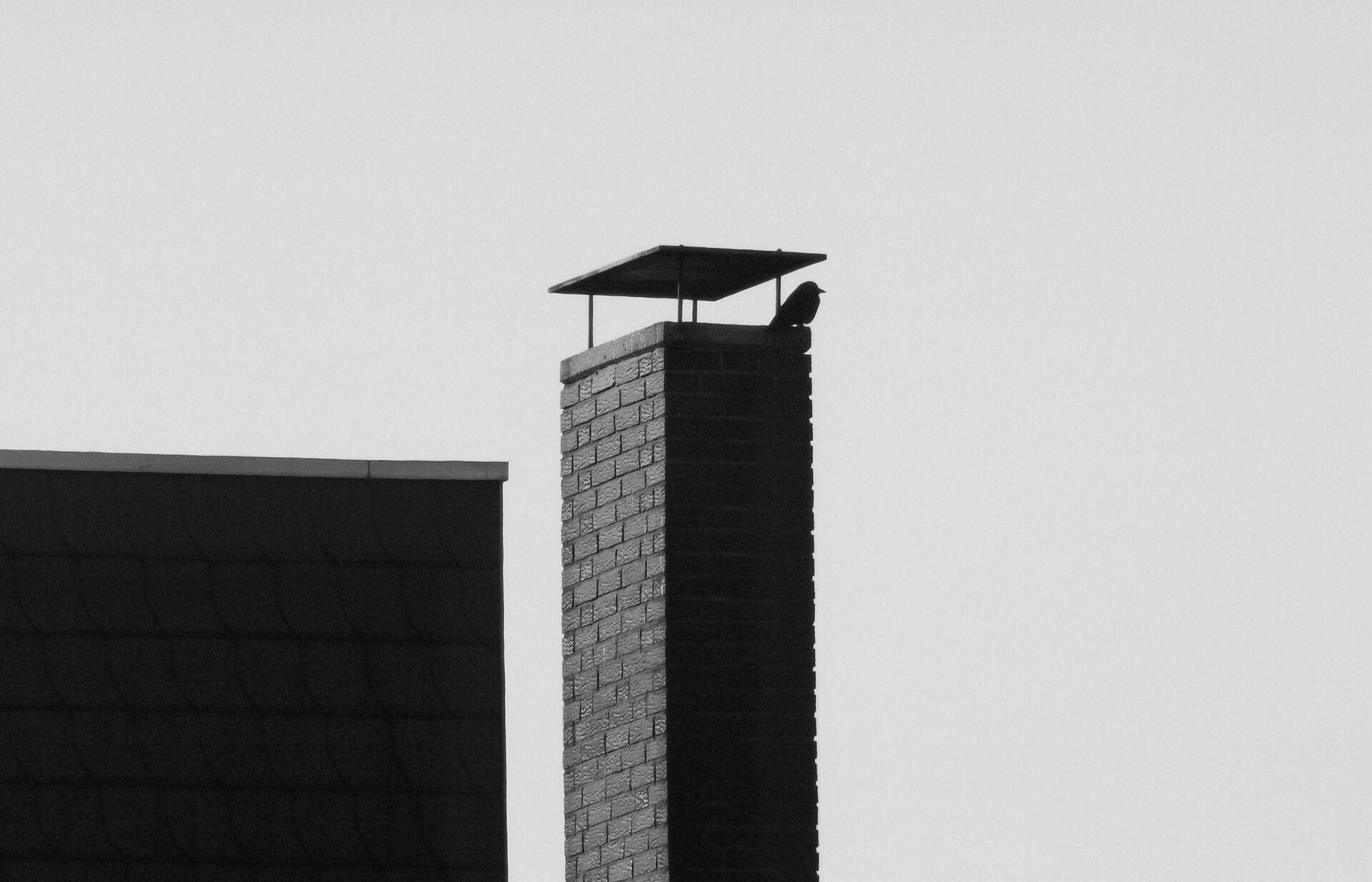


Owners often hear two words after a camera goes up their flue: reline or rebuild. They sound like two prices for one fix. They are two fixes for two different problems, and plenty of chimneys need neither. Hemlock Chimney Company sees a lot of older brick chimneys around Maywood with clay tile inside, and the choice between these repairs comes down to which part of the chimney failed: the lining that carries the smoke, or the brick that holds everything up.
Two layers, two kinds of failure
An older masonry chimney has an inner layer and an outer layer. The inner layer is clay tile, stacked in sections up the middle. It carries the hot gas and keeps it off the brick. The outer layer is the brick itself, which carries the weight and keeps the weather out.
Each layer fails in its own way:
- Tile cracks from heat, from a chimney fire, from settling, or from shaking. Joints between tile sections lose their mortar and open up.
- Brick fails from water. Joints wash out, faces flake, and above the roof the stack starts to loosen or lean.
Relining fixes the inner layer. Rebuilding fixes the outer layer. If only one layer has failed, paying for the other is money spent on the wrong chimney.
What the camera shows
A visual check from the firebox cannot see far up a flue, which is why we price flue repairs from a Level 2 inspection, at $375. The camera footage usually falls into one of four pictures:
- A tile or two cracked, the rest sound. On some chimneys a targeted repair is possible. On many it is not, because the crack is out of reach. We tell you which.
- Open joints all the way up. The tile is intact but the gaps between sections let heat and gas reach the brick. A liner is usually the answer.
- Many cracked or missing sections. The tile has failed as a system. A liner is the answer if the brick around it is sound.
- Tile fine, outer brick failing. This is a masonry job. Rebuilding the upper stack, and replacing the top tile sections as part of it, can be enough without a full liner.
Sometimes the footage shows both layers in trouble. Then the estimate covers both, and the order matters: the brick is made sound first, and the liner goes in after.
Relining, in plain terms
A new liner runs inside the old flue from the appliance or firebox to the top. For most homes in this area that means a stainless steel liner sized for what the chimney will serve, whether that is an open fire, a gas insert or a wood stove. A cast liner, where a mix is formed inside the old flue, is another option on some chimneys. The chimney liner installation page goes into both.
We do not publish a single price for relining, because the length of the flue, the liner type and how much has to be opened at the top all change it. The estimate lists those three things for your chimney, with a figure for each liner option.
Rebuilding, in plain terms
A rebuild takes brick down to the point where the mortar is holding again and lays it back up with new mortar, new tile at the top and a new crown. On many Maywood houses that point is at or near the roof. On a chimney that has been left a long time, it can be further down. Our chimney rebuilds page covers the range.
A rebuild is the larger job of the two and touches the roof, so we usually plan it for the dry season. If the stack is leaning or loose, though, it cannot wait for a convenient month.
One point owners miss: rebuilding the outside does nothing for cracked tile lower down. If the camera found trouble in the middle of the flue, a rebuild of the top alone leaves that trouble in place. That is why our estimates for a damaged chimney often show a rebuild line and a liner line together, with the option of doing one now and the other later where the footage allows it.
What can wait, and what cannot
The fireplace you never use is the easiest case. A cracked flue that carries nothing is not a hazard. You can stop using it, cap the top so rain and animals stay out, and plan the liner for a later year. We write that option down when it fits.
A flue that serves a gas furnace or water heater, or a fireplace you light every winter, is different. Cracked tile there lets hot gas and carbon monoxide find their way into the walls. That repair belongs at the top of the list.
Getting the choice written down
Request a flue estimate and tell us what the chimney serves now and whether you plan to keep burning in it. If you already have camera footage from another inspector, mention it; we may still run our own, but it helps us plan. The estimate we write sets relining and rebuilding side by side where both apply, with the parts that can wait marked as such.
For homes in the city of Los Angeles, see our Los Angeles page. If a failed inspection in a sale started all this, our up to code repairs page walks the same choices with the sale in mind.
Whichever layer turns out to be the problem, the place to begin is our contact page.
Ready for Numbers on Your Own House?
Hemlock Chimney Company looks at the chimney, then writes up each repair option with its price and a mark for urgent, soon or watch. Requests from Maywood, South Gate, Monterey Park and the rest of the route start on the contact page.